

Customer-Centric Supply Chain Planning: The Difference is in the Details
I was fortunate to join the Arkieva team in strategy sessions with our Belgium team and European partner - Solventure....
- By
- August 24th, 2016
I was fortunate to join the Arkieva team in strategy sessions with our Belgium team and European partner - Solventure....

A new report by SupplyChainDigest: “Supplier Integration in an Outsourced Supply Chain World: A Benchmark Report,” showed a growing trend...

Manufacturers, with interdependent global supply chains, are faced with the challenge of employing effective global risk management strategies that encompass...
Naturally, it’s easy to wait until something is broken before fixing it. For manufacturing companies looking to stay ahead of the curve in today’s highly competitive marketplace, the culture of continuous improvement is highly critical. While most manufacturing businesses might agree on the fact that they need to have a supply chain improvement process in place, with the aim of – continuously cutting unnecessary costs, improving productivity while improving customer satisfaction – getting started on the other hand, usually gets pushed to the bottom of the to-do list.
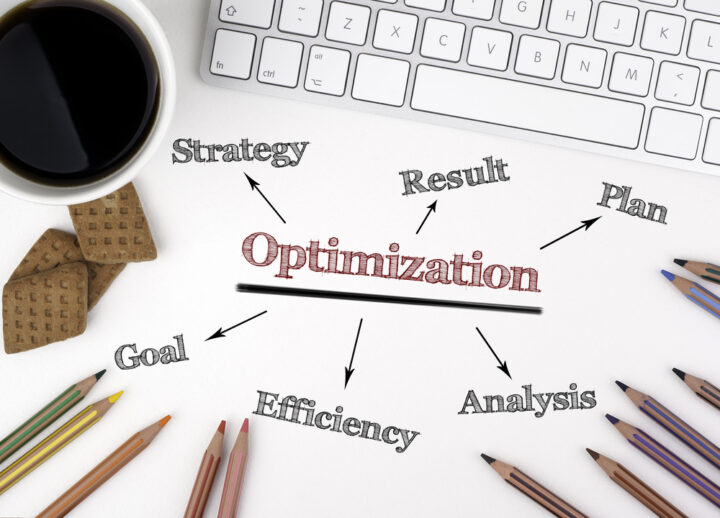
What is the Supply Chain “Maturity Model” Buzz? Aside from the terms big data and analytics, the most common buzz word in supply chain solutions is “Maturity Model”. As a 40+ year veteran of campaigns to bring better analytics to bear on key organizational decisions, my immediate reaction was: another buzz word with more hype than substance glossing over or ignoring a rich set of outstanding prior and current work that can be an inconvenient truth. Words of wisdom such as – how can we move forward, if we don’t know where we are going – seem obvious and a dangerous simplification!

Sometimes when we make a mistake it's hard not to dwell over it and relive the incident over and over in our minds. Reflection on a past mistake and help us avoid or learn from this mistake in the future, but how do we not turn this reflection into an obsession?

Sales and Operations Planning is a continuous business process that enables firms from hospitals to chemicals to respond to emerging situations intelligently. Today we will discuss the relevance of buzz words such as Analytics, Predictive Analytics, Data Science, and Machine Learning, for S&OP.
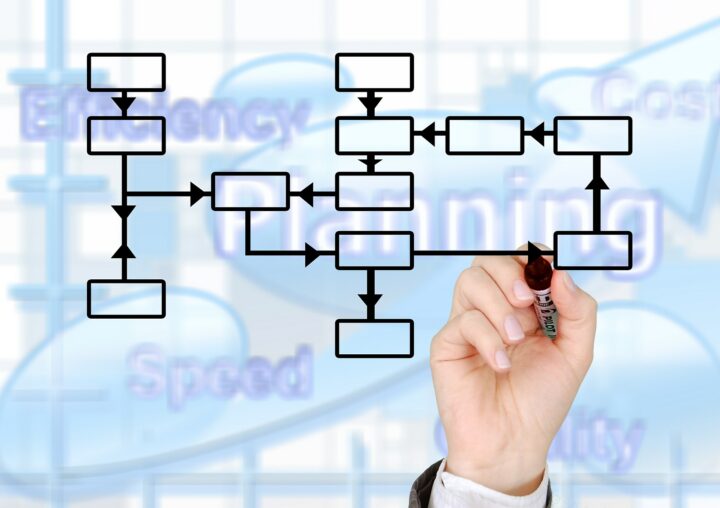
Organizations, from health care facilities to manufacturing giants to small restaurants, can be viewed as an ongoing sequence of loosely coupled activities where current and future assets are matched with current and future demand across the supply chain or demand supply network. These planning and scheduling decisions occur across a complex playing field. Read to learn more about these planning activities.

I was lucky to attend the Gartner Supply Chain Executive Conference in Phoenix last May. 1 of the keynote speakers...

Good handling of market demand data is one of the most vital concepts in any supply chain. But how to create powerful demand planning implementation? The five-step approach outlined below provides guidance.

Last time in Sales, Inventory & Operations Planning (SiOP) - Part Four I talked about the Supply step of the cross-functional process...

Last time in Sales, Inventory & Operations Planning (SiOP) - Part Three I talked about the Demand step of the cross-functional process...






Please tell us a little bit about yourself to help us better assist you.